BABA

For over two decades, literally my entire life, Raila was less a politician and more a recurring season of Kenyan history. Since 2007 - the first election I was old enough to eavesdrop on - Baba was always on the ballot. It didn’t matter whether the country felt hopeful, hopeless, fresh, tired, united, divided, dizzy or dangerously sober. Baba appeared like clockwork. My parents marked those ballots with a familiar conviction from 2002 and Raila kept reappearing with the persistence of a character who knew the show could not go on without him.
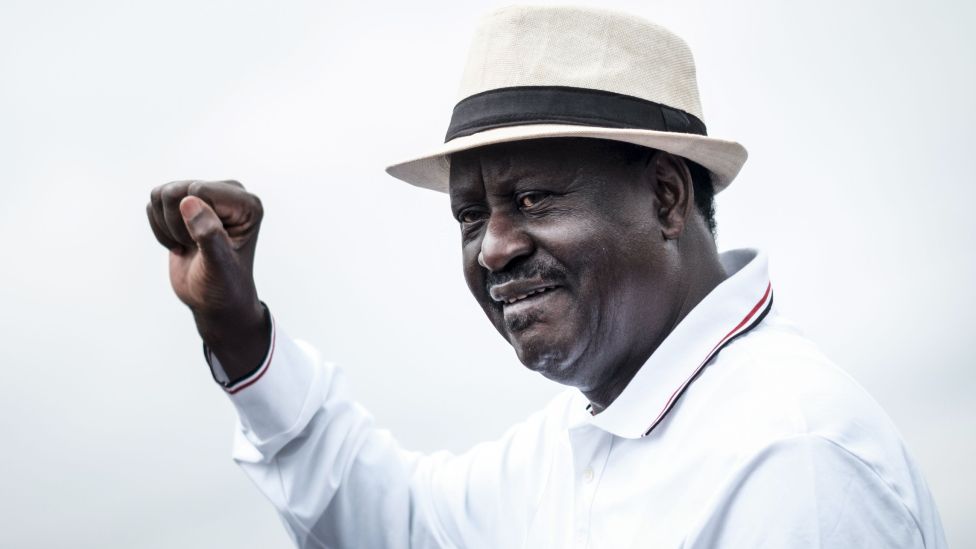
And now, the show must go on without him. Which feels strange, if not slightly illegal.
Calling Raila Odinga an enigma is not poetic exaggeration - it is political reality. He lived in contradictions so comfortably that his life resembled a Rubik’s cube that refused to stay solved.
Son of Kenya’s first Vice President, but spent years in detention. Champion of democracy, but fluent in the language of political deals. Opposition leader, but Prime Minister.
Detained for pushing multiparty politics, later accused of hugging his enemies too quickly. A man of the masses, but with a continental portfolio at the African Union.
Agwambo. The unpredictable.
He understood Kenyan politics not as a straight road to power but as a winding footpath in a crowded market: push here, sidestep there, smile at someone’s mother, duck under a swinging goat leg and somehow emerge on the other side still holding all your belongings.
He was many things - and depending on who you asked, he was never enough or always too much.
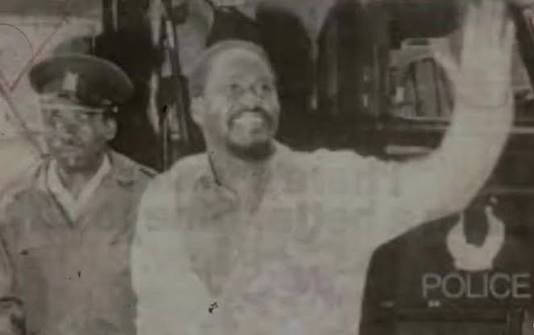
Raila’s detentions under the Moi regime were warnings to anyone who believed too strongly in freedom. He was held without trial. Subjected to isolation. Left alone with his thoughts - and Raila’s thoughts, as history shows, were dangerous things.
One of the lesser-known wounds he carried came from the silence surrounding his mother’s death in 1984. Prison officials delayed telling him for months. By the time he learned she was gone, the funeral was long over, the grief already distributed to the rest of the family. He grieved alone, in a cell, learning that even sorrow can be rationed by the state. Those years didn’t break him. If anything, they sharpened him. He walked out of detention with a stronger spine and a more complicated smile - the smile of a man who has not only seen the state’s teeth up close but memorized their arrangement.
Long before he ever shook hands with anyone at the top, Raila was one of the keystones of Kenya’s second liberation. Multiparty politics did not magically sprout from the soil; it was pushed, defended and paid for in blood and fear. Raila was there, not at the finish line, but in the trenches.
His fingerprints are all over the 2010 Constitution, a document that reshaped Kenya more than any manifesto ever could. Whether you loved him or didn’t understand him, you are living in a country shaped by decisions he fought for.
He pressured the powerful, but also sat with them. He marched with protestors, but also shook hands with presidents. He protested the system, then negotiated inside it. Was that contradiction? Or was it political adulthood? Depends on the day, and who you ask. Some Kenyans missed this chapter, perhaps distracted by the heat of local politics, but Raila didn’t just dream in Kenyan.
He dreamed in African.
As the African Union High Representative for Infrastructure Development, he pushed big projects - cross-border highways, railways, power corridors, the stuff that makes a continent feel stitched together instead of loosely stapled. His office was part diplomacy, part engineering, part prophetic vision. He may not have achieved the full dream, but he planted enough seeds that future leaders will find themselves walking through gardens they did not sow.
Here lies the mystery: Raila never became president, yet shaped Kenya more than many who did. He lost elections, but never lost relevance. He conceded, re-aligned, recalibrated, re-emerged — a political phoenix who refused to read obituaries written about him. His political manoeuvring sometimes angered younger Kenyans who believed he compromised too easily, we the Gen-Zs told him to stay at home during our maandamanos, Yet older generations saw wisdom where others saw wobbling. Raila understood something many never learned: power in Kenya moves like water, not stone. You don’t always get it by force; sometimes you get it by flow.
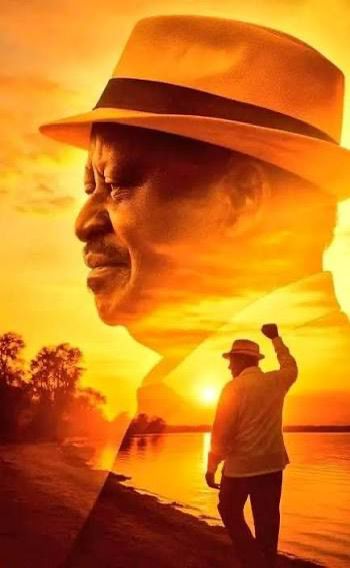
News of his death on October 15, 2025, in India, hit the country like a gong you aren’t prepared for - deep, echoing, disorganizing. I remember exactly what I was doing, out on fieldwork when the first helicopter flew overhead and I received a call from my mother, even my words cannot draw a picture for you to capture that exact moment. Kenya was not mourning a politician. It mourned a political era, a vocabulary, a rhythm. The word “Baba” changed tone overnight — from a chant to a whisper.
A vacuum appeared instantly. Because Kenya has political parties, yes, but it also has political characters, and none was larger than Raila. He didn’t groom a successor in the classic sense, perhaps because enigmas don’t reproduce, they merely exist. ODM faces an identity crisis. The opposition felt naked. The government felt unexpectedly exposed. Even his critics — the loudest ones online…went quiet, as if realizing they had been sparring with an institution, not a man.
Here is the truth we don’t always say out loud: Kenya’s political story cannot be told without Raila Odinga. Not neatly. Not honestly. His legacy is not a straight line. It is a mosaic:
- Democracy fighter with scars to prove it.
- Opposition anchor who defined accountability.
- Constitutional midwife who helped birth a new nation.
- Pan-African thinker who believed in a continent that moves.
- Symbol of resistance for many marginalized communities.
- A paradox for younger voters who admired him but outgrew his methods.
- A father figure to millions who called him “Baba” with absolute sincerity.
Raila’s legacy is not clean, but clean legacies are usually lies. His mattered because it was messy, human, contradictory, lived, paid for in full. Raila Odinga leaves behind big shoes, yes - but also a question without an immediate answer: who holds the space he held? Not just the political space, but the symbolic one. The space of defiance, endurance, unpredictability, hope, frustration and possibility - all wrapped in one man whose presence was never neutral.
I grew up seeing his name on every ballot. My parents voted for him like it was tradition, religion and optimism brewed into one. And now, for the first time in my lifetime, the ballot will arrive without him.
Kenya must write a new chapter - but chapters written after an enigma are always harder, because you’re not replacing a man. You’re replacing a phenomenon. Baba has exited the stage, but the echo remains. And echoes, history shows, have very long lives.